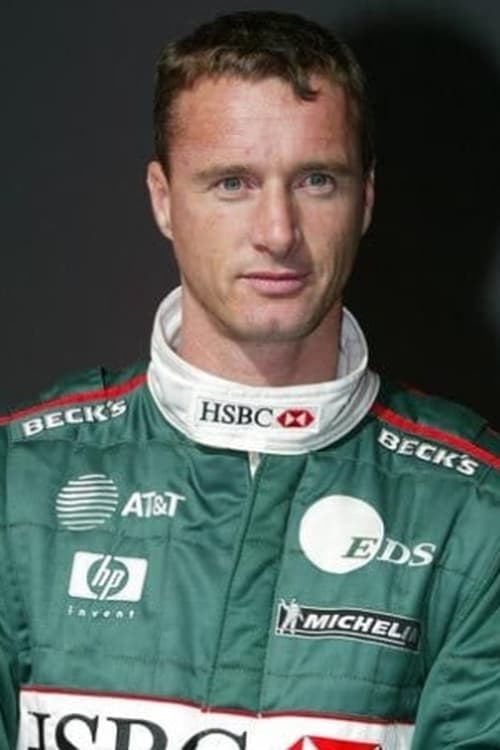
Eddie Irvine
I PERSONAL INFO
Edmund "Eddie" Irvine Jr. (; born 10 November 1965) is a former racing driver from Northern Ireland who competed under the British flag in Formula One from 1993 to 2002. Irvine was runner-up in the Formula One World Drivers' Championship in 1999 with Ferrari, and won four Grands Prix across ten seasons. Irvine began his career at the age of 17 when he entered Formula Ford, achieving early success,...
Edmund "Eddie" Irvine Jr. (; born 10 November 1965) is a former racing driver from Northern Ireland who competed under the British flag in Formula One from 1993 to 2002. Irvine was runner-up in the Formula One World Drivers' Championship in 1999 with Ferrari, and won four Grands Prix across ten seasons. Irvine began his career at the age of 17 when he entered Formula Ford, achieving early success, before progressing to the Formula Three and Formula 3000 Championships. He made his Formula One debut in 1993 with Jordan Grand Prix, where he achieved early notoriety for his involvement in incidents on and off the track. He scored his first podium in 1995 with Jordan, before moving to Ferrari in 1996. His most successful season was in 1999 when he took four victories and finished second in the World Championship, two points behind McLaren driver Mika Häkkinen. In his four years with Ferrari, he also finished fourth overall in 1998 and scored 22 podiums. He moved to Jaguar Racing in 2000, scoring the team's first podium in 2001 and his final podium in 2002. Irvine retired from competitive motorsport at the end of the 2002 season. As of 2024, Irvine jointly holds the record with four drivers (Lando Norris, Mika Häkkinen, Jean Alesi and Patrick Depailler) for scoring the most podiums before winning a Grand Prix (15). Since retiring, Irvine became a media personality in Great Britain. He was linked with the takeover of the Jordan and Minardi Formula One teams in 2005 but talks came to nothing. Irvine also expanded his interests in the property market, having built up an investment portfolio during his racing career. Early life and career Irvine was born on 10 November 1965 in Newtownards, County Down Northern Ireland, to Edmund Sr. and Kathleen. He grew up in the village of Conlig and was educated at Regent House Grammar School in Newtownards. He has one older sister, Sonia, who acted as Irvine's physiotherapist until 1999. Irvine's first taste of motorsport came when his family spent their holidays attending the British Grand Prix. His father also raced in single-seaters for fun. His childhood hero was countryman John Watson. Irvine began to compete with racing cars in 1983. He was initially interested in motorcycle racing, but his parents thought the sport too dangerous and was encouraged by his father to race in Formula Ford. Irvine worked unpaid in his father's scrapyard, in return for which, his father funded his racing hobby. He won his first race at Brands Hatch in 1984, and an award for best driver. In 1987 he joined the Van Diemen team and won the Esso Formula Ford series, the RAC Formula Ford series, and the Formula Ford Festival. In the winter of 1987, Marlboro organised a test in which the fastest driver would be offered a drive for the following British Formula 3 season. Irvine was that driver and joined West Surrey Racing for 1988. It was a season without any success and Irvine ended it in fifth place. He raced at the Macau Grand Prix for the first time and started the race from pole position, but failed to finish. In 1989 Irvine competed in the International Formula 3000 Championship with Pacific Racing. Irvine finished the season in ninth place, ahead of teammate JJ Lehto in thirteenth, who was then considered to be a promising young driver. In 1990, Irvine joined the Jordan Formula 3000 team. He won in Germany and ended the season in third place, beating his teammates Heinz-Harald Frentzen and Emanuele Naspetti. Irvine finished on the podium at both the Macau Grand Prix and the Fuji F3 Cup. At the end of the season Irvine moved to Japan to compete in that country's Formula 3000 championship. In 1991 he raced for Cerumo Racing and won one race and amassed 14 points to finish seventh in the Drivers' Championship. Irvine's first race at the 24 Hours of Le Mans was in 1992 driving a SARD Toyota Group C car alongside Roland Ratzenberger and Eje Elgh. The team finished ninth overall and came second in the Group C class. Formula One career Jordan (1993–1995) 1993 Irvine made his Formula One debut in the penultimate race of the season, the Japanese Grand Prix, partnering Rubens Barrichello at the Jordan Grand Prix team. He made an immediate impact, not only by scoring a point with sixth place, but by unlapping himself against race leader, and subsequent winner, Ayrton Senna. After the race, Senna, angry at what he perceived to be "unprofessional" driving, approached Irvine in the Jordan hospitality unit, and following an altercation, threw a punch at Irvine, for which he received a suspended two-race ban. Irvine retired from the final race in Australia with accident damage. After two races, Irvine finished 22nd in the Drivers' Championship with his sole point. Irvine raced at the 24 Hours of Le Mans for the second time, driving a Toyota Group C car alongside Toshio Suzuki and Masanori Sekiya. The team finished fourth overall. 1994 Irvine remained at Jordan for 1994 and was again partnered by Barrichello. At the opening round in Brazil, Irvine was involved in a four car crash. He later received a one-race ban and a $10,000 fine by the race stewards. Irvine appealed to the FIA against the decision, but his appeal was rejected on 6 April, and the penalty increased to a three-race ban. His seat was filled by Aguri Suzuki for the following Pacific Grand Prix, and Andrea de Cesaris for the races in San Marino and Monaco. Irvine returned for the Spanish Grand Prix where he scored his first points of the season with sixth place. Five consecutive retirements followed, and he was unable to finish the Belgian Grand Prix due to an alternator failure, although he was classified 13th due to having completed over 90% of the race distance. Irvine retired from the Italian Grand Prix due to an engine failure and was later given a one-race ban, suspended for three races, for an incident with Team Lotus driver Johnny Herbert on the opening lap. Irvine garnered further controversy during the first qualifying session of the Portuguese Grand Prix when he clipped Williams driver Damon Hill. Hill's car flipped upside down, but he escaped unhurt. Irvine was warned a similar incident would see his Super Licence revoked. He took consecutive points scoring finishes in the next two races—fourth at the European Grand Prix and fifth at the Japanese Grand Prix. Irvine retired from the season closing race in Australia when he spun off. He finished the year 16th in the Drivers' Championship, with six points. Outside of Formula One, Irvine participated in his third consecutive 24 Hours of Le Mans as a substitute for the late Roland Ratzenberger, who died after crashing in qualifying for the 1994 San Marino Grand Prix, driving for SARD alongside Mauro Martini and Jeff Krosnoff. The team were leading with 90 minutes to go when a gearbox issue forced the car to slow, costing them victory. They finished second overall and first in the LMP1/C90 class. 1995 Irvine remained at Jordan for 1995 and was again partnered by Barrichello. It was a bad start: Irvine was forced into retirement at the opening race, in Brazil, due to a gearbox actuator problem. In the following race in Argentina he was involved in a first-lap collision with McLaren driver Mika Häkkinen, and retired with an engine failure after only six laps. He finished eighth at the San Marino Grand Prix, and scored points with a fifth-place finish in Spain. Irvine secured the first podium of his Formula One career with third place in Canada. At the Belgian Grand Prix, his car caught fire during a pitstop as the fuel valve was jammed open, and although uninjured, he was forced to retire from the race. In the week before the European Grand Prix, Jordan announced that Irvine would be retained on a two-year contract. However, Ferrari then announced that it had bought out Irvine's contract, and that he would be partnering Michael Schumacher at the team for 1996. He fared well in the race by finishing sixth, although he finished outside the points in the Pacific Grand Prix. Irvine scored his final points of the season with a fifth in Japan, and finished the season with a retirement in Australia, due to pneumatic pressure. He finished the year 12th in the Drivers' Championship with ten points. Ferrari (1996–1999) 1996 At the season opener in Australia, Irvine finished in third place, where he started, after out-qualifying new teammate, and then double World Champion, Michael Schumacher. At the following race in Brazil he finished outside the points in seventh position, and took fifth in Argentina. At the European Grand Prix he was involved in an incident with Olivier Panis, resulting in both drivers retiring from the race. Fourth place in the San Marino Grand Prix preceded eight consecutive retirements, due to unreliability or being involved in racing incidents. Irvine finished the Portuguese Grand Prix in fifth, but retired again from the final race of the season at Suzuka. Irvine finished tenth in the Drivers' Championship with 11 points. 1997 The first race of the season in Australia saw Irvine involved in a race ending first lap crash with Williams driver Jacques Villeneuve. Two races later, he finished a career high second place in Argentina, where Irvine challenged Villeneuve for the lead, who was suffering with a stomach ailment, and his car with brake problems. The result ended demands in the Italian press for Irvine to be sacked. Two consecutive third places in San Marino and Monaco, gave Irvine his best string of finishes to date. At the Spanish Grand Prix, Irvine finished only twelfth and was given a ten-second stop-go penalty, after he held up Olivier Panis and Jean Alesi when running a lap down. At the Canadian Grand Prix Irvine was involved in another first lap incident, this time with McLaren driver Mika Häkkinen. He was back on the podium with third place at the French Grand Prix, before a run of seven races where he was either out of the points or out of the race. During the summer, it was announced that Irvine would remain at Ferrari for 1998. His run of poor results ended with a third-place finish at the Japanese Grand Prix, and he concluded the season with a fifth place at the European Grand Prix. Irvine finished seventh in the Drivers' Championship with 24 points. 1998 Irvine remained at Ferrari for 1998 and was again partnered with Schumacher. Irvine's fitness level was placed in doubt when he suffered from back pain. To combat the issue, a new seat was installed in his car. Irvine had very little running in the new Ferrari F300 during pre-season testing, and was concerned with the tyre war between Goodyear, Ferrari's tyre supplier, and Bridgestone, but was nevertheless confident about his chances over the coming season. At the first race of the season in Australia Irvine finished in fourth, and in the following race in Brazil, outside the points in eighth place. Irvine finished on the podium six times in the next seven races, including a second-place finish in France, behind teammate Schumacher. In July, it was announced Irvine had signed a two-year extension to his contract. The contract stipulated that Irvine was permitted to choose his own strategy and setup, although he would remain in a supporting role to Schumacher. After two retirements in the next three races, Irvine finished the season with three points scoring finishes, including two second places in Italy and Japan. Irvine finished the season fourth in the Drivers' Championship with 47 points. 1999 For 1999, Irvine was confident heading into the season, saying: "After last year's results where I got my best ever championship finish with fourth place overall, now, for this year, I want to do even better". His season got off to a good start: after 81 Grand Prix, Irvine scored his maiden Formula One victory at the season opening round in Australia, giving him the lead of the World Drivers' Championship for the first time. In the following race in Brazil, an unsched
Sponsored
![Schumacher (2021) 720P Nf-Web X265 Hevc Msubs [Dual Audio][Hindi 5 1 English 5 1] -Mkvc](https://binodon.club/storage/media/remote/schumacher-2021-720p-nf-web-x265-hevc-msubs-dual-audiohindi-5-1english-5-1-mkvc/poster.jpg)