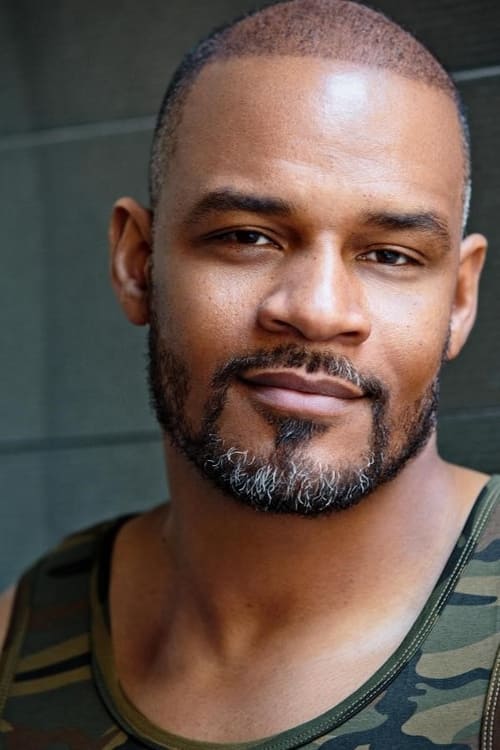
Johann Sebastian
I PERSONAL INFO
Johann Tate • Johan Tate
Johann Sebastian Bach (31 March [O.S. 21 March] 1685 – 28 July 1750) was a German composer and musician of the late Baroque period. He is known for his prolific output across a variety of instruments and forms, including the orchestral Brandenburg Concertos; solo instrumental works such as the Cello Suites and Sonatas and Partitas for Solo Violin; keyboard works such as the Goldberg Variations and...
Johann Sebastian Bach (31 March [O.S. 21 March] 1685 – 28 July 1750) was a German composer and musician of the late Baroque period. He is known for his prolific output across a variety of instruments and forms, including the orchestral Brandenburg Concertos; solo instrumental works such as the Cello Suites and Sonatas and Partitas for Solo Violin; keyboard works such as the Goldberg Variations and The Well-Tempered Clavier; organ works such as the Schübler Chorales and the Toccata and Fugue in D minor; and choral works such as the St. Matthew Passion and the Mass in B minor. He is known for his mastery of counterpoint, as heard in The Musical Offering and The Art of Fugue. Felix Mendelssohn precipitated the Bach Revival with a performance of the St. Matthew Passion in 1829. Ever since, Bach has been acclaimed as one of the greatest composers in the history of Western music. The Bach family had already produced several composers when Johann Sebastian was born in Eisenach, the youngest child of the city musician Johann Ambrosius Bach. After being orphaned at age 10, he lived for five years with his eldest brother, Johann Christoph, then continued his musical education in Lüneburg. In 1703 he returned to Thuringia, working as a musician for Protestant churches in Arnstadt and Mühlhausen. Around that time he also paid extended visits to the courts in Weimar, where he expanded his organ repertory, and the reformed court at Köthen, where he was mostly engaged with chamber music. By 1723 he was hired as Thomaskantor, church music director of the city of Leipzig and thus responsible for music in four Lutheran city churches and for the St. Thomas School. He decided to compose annual cycles of church cantatas, and also wrote music for Leipzig University's student ensemble, Collegium Musicum. In 1726 he began publishing his organ and other keyboard music. In Leipzig, he had difficult relations with his employer, as he had during some of his earlier positions. This situation was somewhat remedied when his sovereign, Augustus III of Poland, granted him the title of court composer of the Elector of Saxony in 1736. In the last decades of his life, Bach reworked and extended many of his earlier compositions. He died due to complications following eye surgery in 1750 at the age of 65. Four of his twenty children, Wilhelm Friedemann, Carl Philipp Emanuel, Johann Christoph Friedrich, and Johann Christian, became composers. Bach enriched established German styles through his mastery of counterpoint, harmonic and motivic organisation, and his adaptation of rhythms, forms, and textures from abroad, particularly Italy and France. His compositions include hundreds of cantatas, both sacred and secular. He composed Latin church music, Passions, oratorios, and motets. He adopted Lutheran hymns, not only in his larger vocal works but also in such works as his four-part chorales and his sacred songs. Bach wrote extensively for organ and other keyboard instruments. He composed concertos, for instance for violin and for harpsichord, and suites, as chamber music as well as for orchestra. Many of his works use contrapuntal techniques like canon and fugue. Several decades after his death, in the 18th century, Bach was still primarily known as an organist. Several biographies of Bach were published in the 19th century, and by the end of that century all of his known music had been printed. Dissemination of Bach scholarship continued through periodicals (and later websites) devoted to him, other publications such as the Bach-Werke-Verzeichnis (BWV, a numbered catalogue of his works), and new critical editions of his compositions. His music was further popularised by a multitude of arrangements, including the "Air on the G String" and "Jesu, Joy of Man's Desiring", and recordings, among them three boxed sets of performances of his complete œuvre marking the 250th anniversary of his death. Family and childhood Early life Johann Sebastian Bach was born in Eisenach, the capital of the duchy of Saxe-Eisenach, in present-day Germany, on 21 March 1685 O.S. He was the eighth and youngest child of Johann Ambrosius Bach, director of the town musicians, and Maria Elisabeth née Lämmerhirt, daughter of a town councillor. The Bach family, traditionally traced to the patriarch Vitus "Veit" Bach (d. 1619), produced three to four generations of musicians in the Thuringia region, whose insular cultural climate fostered conservative musicianship, with external influences arriving mainly via the courts. Nothing is definitively known about Bach's early years before 1693; his musical education in particular is highly conjectural. His family, particularly the uncles, were all professional musicians who worked as church organists, court chamber musicians, and composers. Bach's father presumably taught him the violin, Ambrosius' own primary instrument, along with basic music theory principles. One uncle, Johann Christoph Bach (1645–1693), may have introduced him to the organ, though this is debated since the uncle may not have been close to Bach's immediate family. Bach's mother died in 1694, and his father eight months later in February 1695. The 10-year-old Bach moved in with his eldest brother, Johann Christoph Bach (1671–1721), the organist at St. Michael's Church in Ohrdruf, Saxe-Gotha-Altenburg. There he studied, performed, and copied music, including his brother's, despite being forbidden to do so because scores were so valuable and private and ledger paper was costly. He also received instruction on the clavichord from his brother. Johann Christoph exposed him to the works of composers of the day, including South Germans such as Johann Caspar Kerll, Johann Jakob Froberger, and Johann Pachelbel (under whom Johann Christoph had studied); North Germans such as Georg Böhm, Johann Reincken and Friedrich Nicolaus Bruhns from Hamburg, and Dieterich Buxtehude; Frenchmen such as Jean-Baptiste Lully, Louis Marchand, and Marin Marais; and the Italian Girolamo Frescobaldi. He learned theology, Latin, and Greek at the local Gymnasium. By 3 April 1700 Bach had begun studies at St Michael's School in Lüneburg, two weeks' travel north of Ohrdruf. His journey was probably undertaken mostly on foot. He sang in the choir, at least until his voice broke, had access to the school's comprehensive musical library, and received organ lessons. He also came into contact with sons of aristocrats from northern Germany who had been sent to the nearby Ritter-Academie to prepare for careers in other disciplines. Marriages and children Four months after arriving at Mühlhausen in 1707, Bach married his second cousin, Maria Barbara Bach. Later that year their first child, Catharina Dorothea, was born, and Maria Barbara's elder, unmarried sister joined them, remaining to help run the household until she died in 1729. Three sons were also born: Wilhelm Friedemann, Carl Philipp Emanuel, and Johann Gottfried Bernhard. All became musicians, and the first two composers. Johann Sebastian and Maria Barbara had seven children. Their twins born in 1713 died within a year, and their last son, Leopold, also died within a year of his birth. On 7 July 1720, while Bach was in Carlsbad with Prince Leopold, Maria Barbara died suddenly. The next year, he met Anna Magdalena Wilcke, a gifted soprano 16 years his junior, while she was performing at the court in Köthen; they married on 3 December 1721. Together they had 13 children, six of whom survived into adulthood: Gottfried Heinrich; Elisabeth Juliane Friederica (1726–1781); Johann Christoph Friedrich and Johann Christian, who both became musicians; Johanna Carolina (1737–1781); and Regina Susanna (1742–1809). Career Weimar, Arnstadt, and Mühlhausen (1703–1708) In January 1703, shortly after graduating from St. Michael's in 1702 and being turned down for the post of organist at Sangerhausen, Bach was appointed court musician in the chapel of Johann Ernst III, Duke of Saxe-Weimar. His role there is unclear, but it probably included menial, non-musical duties. During his seven-month tenure at Weimar, his reputation as a keyboardist spread so widely that he was invited to inspect the new organ and give the inaugural recital at the New Church (now Bach Church) in Arnstadt, about 30 kilometres (19 mi) southwest of Weimar. On 14 August 1703 he became the organist at the New Church, with light duties, a relatively generous salary, and a new organ tuned in a temperament that allowed music written in a wider range of keys to be played. Although Johann Ernst III was musically enthusiastic, the relationship grew tense. In 1705–1706, Bach upset the duke when, after obtaining a four-week leave of absence, he was away for about four months, taking lessons from the organist and composer Johann Adam Reincken and wanting to hear Reincken and Dieterich Buxtehude play in Lübeck. The visit to Buxtehude and Reincken involved a 450-kilometre (280 mi) journey each way, reportedly on foot. Buxtehude probably introduced Bach to his friend Reincken so that he could learn from his compositional technique (especially his mastery of fugue), his organ playing, and his improvisational skill. Bach knew Reincken's music very well; he copied Reincken's monumental An Wasserflüssen Babylon when he was 15 years old. When Bach revisited Reincken in 1720 and showed him his improvisational skill on the organ, Reincken reportedly remarked: "I thought that this art was dead, but I see that it lives in you." In 1706 Bach applied for a post as organist at the Blasius Church in Mühlhausen. As part of his application, he had a cantata performed at Easter, 24 April 1707, that resembles his later Christ lag in Todes Banden, BWV 4. Bach's application was accepted a month later, and he took up the post in July. The position included higher remuneration, improved conditions, and a better choir. Bach persuaded the church and town government at Mühlhausen to fund an expensive renovation of the organ at the Blasius Church. In 1708 Bach wrote Gott ist mein König, BWV 71, a festive cantata for the inauguration of the new council, which was published at the council's expense. This is the only extant Bach cantata published in his lifetime. Bach returned to Weimar in 1708, after Johann Ernst's death, as court organist. He worked with one of Johann Ernst's sons, also named Johann Ernst, who had a keen interest in music. The prince's interest in collecting music was sufficiently well known that in 1713, when one of Bach's pupils, P. D. Kräuter, requested a leave of absence to study in Weimar, he mentioned the French and Italian music the prince was expected to introduce there. The prince also composed, and Bach wrote the Organ Concerto No.1 in G Major, BWV 592, and Concerto for Organ solo in C major, BWV 595, after a theme by the prince. Return to Weimar (1708–1717) Bach left Mühlhausen in 1708, returning to Weimar this time as organist and from 1714 Konzertmeister (director of music) at the ducal court, where he could work with a large, well-funded contingent of professional musicians. Bach and his wife moved into a house near the ducal palace. Bach's time in Weimar began a sustained period of composing keyboard and orchestral works. He attained the proficiency and confidence to extend the prevailing structures and include influences from abroad. He learned to write dramatic openings and employ the dynamic rhythms and harmonic schemes used by Italians such as Vivaldi, Corelli, and Torelli. Bach absorbed these stylistic aspects to a certain extent by transcribing Vivaldi's string and wind concertos for harpsichord and organ. He was particularly attracted to the Italian style, in which one or more solo instruments alternate section-by-section with the full orchestra throughout a movement. In Weimar Bach continued to play and compose for the organ and perform concert music with the duke's ensemble. He also began to write the preludes and fugues that were later assembled int
Sponsored
FILMOGRAPHY
3 TITLES FOUND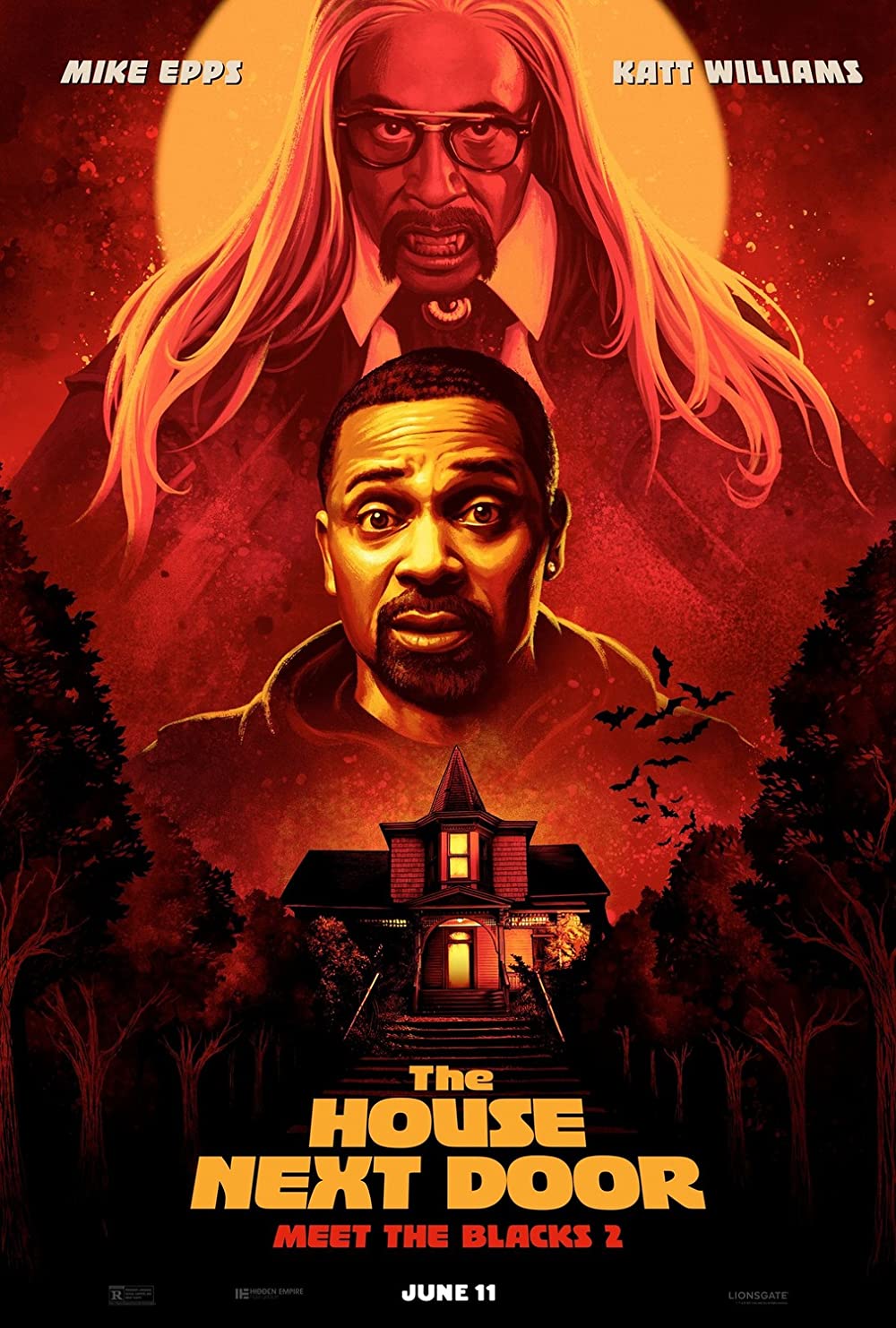
The House Next Door Meet The Blacks 2 2021 720P Bluray 800Mb X264-Galaxyrg
2021 • movie
![Fatale (2020) 720P Bluray X264 Esub [Dual Audio][Hindi 5 1 English 5 1] -Mkvc](https://binodon.club/storage/media/remote/fatale-2020-720p-bluray-x264-esub-dual-audiohindi-5-1english-5-1-mkvc-2/poster.jpg)
Fatale (2020) 720P Bluray X264 Esub [Dual Audio][Hindi 5 1 English 5 1] -Mkvc
2020 • movie
![Meet The Blacks (2016) 720P Bluray X264 Esub [Dual Audio][Hindi 2 0 English 5 1] -Msmod](https://binodon.club/storage/media/remote/meet-the-blacks-2016-720p-bluray-x264-esub-dual-audiohindi-2-0english-5-1-msmod-2/poster.jpg)
Meet The Blacks (2016) 720P Bluray X264 Esub [Dual Audio][Hindi 2 0 English 5 1] -Msmod
2016 • movie