Nicholas Amer
I PERSONAL INFO
Nicolas Amer
Thomas Harold Amer (29 September 1923 – 17 November 2019), known professionally as Nicholas Amer, was an English stage, film and television actor known for his performances in William Shakespeare's plays. Amer made his professional debut in 1948 playing the part of Ferdinand in The Tempest. In his long career, Amer played more than 27 different Shakespearean roles and toured to 31 different countr...
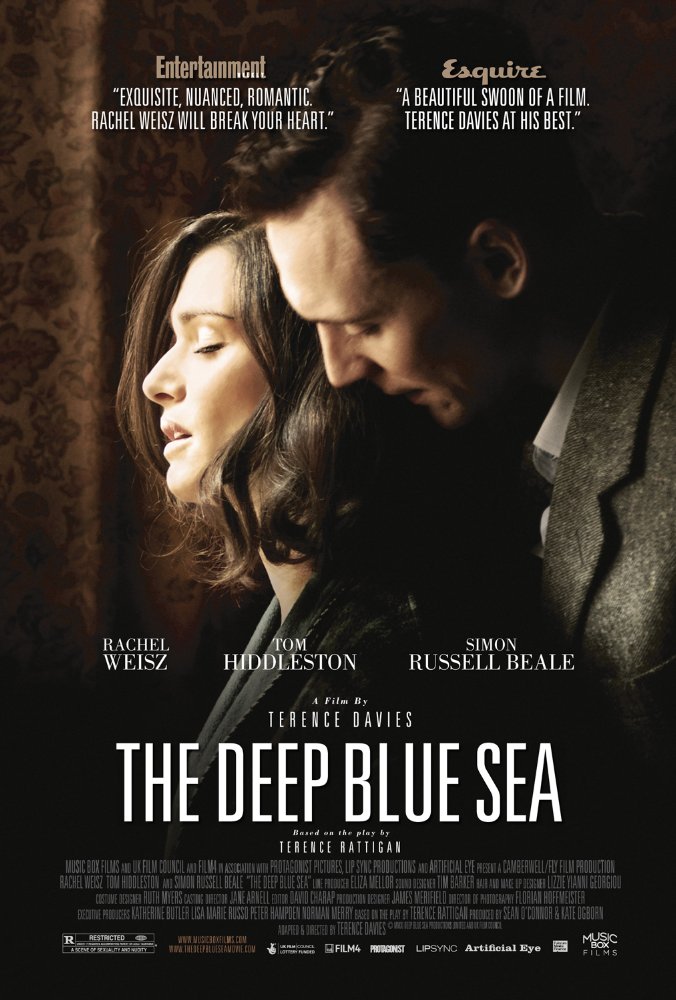
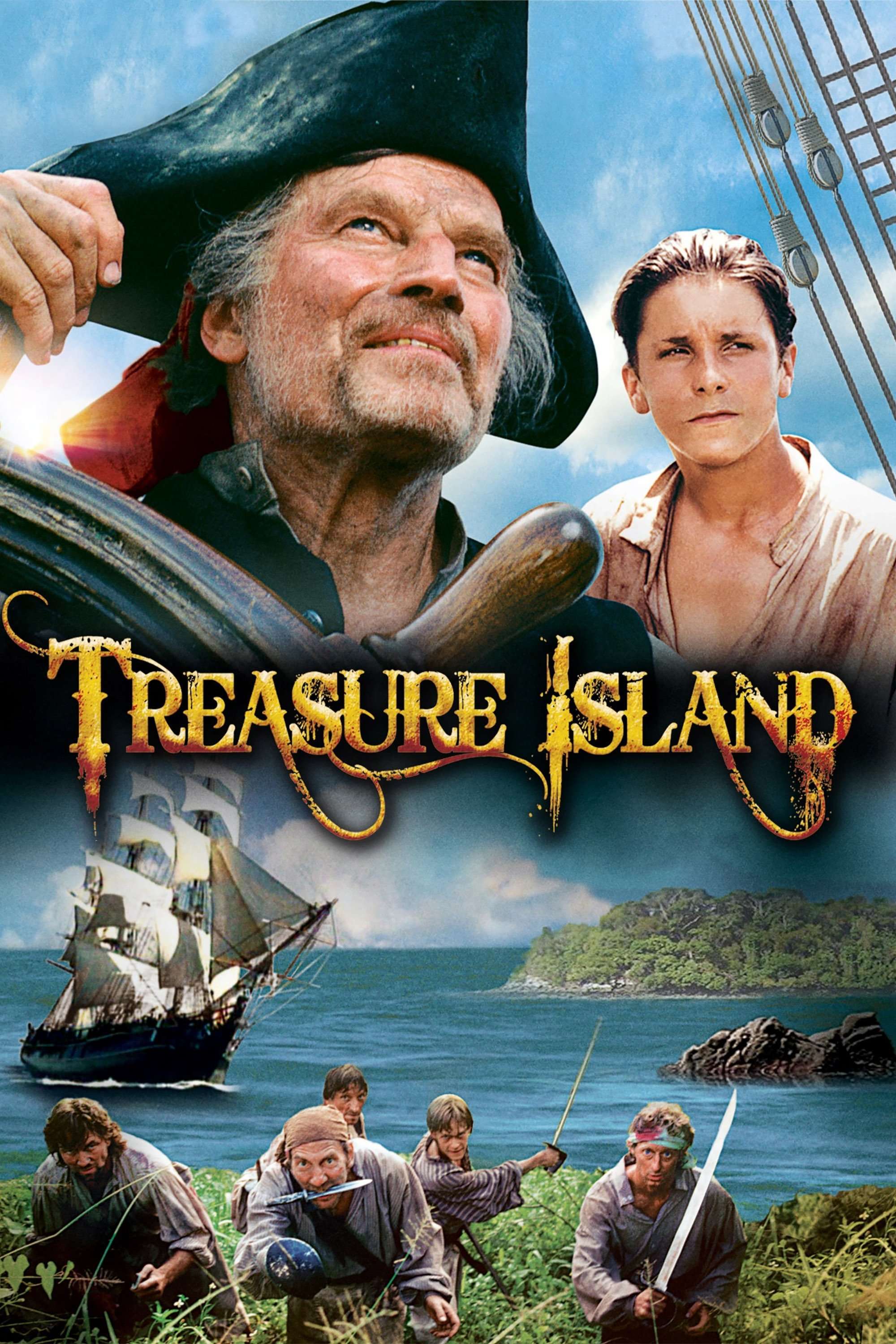
Thomas Harold Amer (29 September 1923 – 17 November 2019), known professionally as Nicholas Amer, was an English stage, film and television actor known for his performances in William Shakespeare's plays. Amer made his professional debut in 1948 playing the part of Ferdinand in The Tempest. In his long career, Amer played more than 27 different Shakespearean roles and toured to 31 different countries. Amer was born in Tranmere, Birkenhead, Cheshire. He served for five years during World War II in the Royal Navy as a wireless operator aboard Motor Torpedo Boats, first in North Africa, then in the Allied invasion of Sicily, where he was wounded in action. Following demobilisation in 1945, he studied at the Webber Douglas School of Singing and Dramatic Art in London for two years, winning the Webber Cup in his final year. He adopted the stage name Nicholas Amer and joined the Liverpool Playhouse under John Fernald. Together with Harold Lang, in 1963 he formed Voyage Theatre as a vehicle for performing Shakespeare's plays overseas. Amer's many roles included those of Romeo, Laertes (three times), Hamlet, Ferdinand (three times), Andrew Aguecheek, Donalbain and, as he got older, Julius Caesar, Macbeth and Macduff. In the 1980s he toured the US playing King Duncan in an Old Vic production of Macbeth. His London stage appearances included A Man for All Seasons with Charlton Heston, Captain Brassbound's Conversion with Penelope Keith and The Wolf with Judi Dench and Leo McKern. Amer's first film part was as a 'pot boy' in The Mudlark (1950) with Alec Guinness and Irene Dunne. Other film appearances included Chapuys in Henry VIII and His Six Wives (1972), Al-risâlah (The Message) (1976) starring Anthony Quinn, Admiral Nelson in Nelson's Touch (1979), The Prince and the Pauper with Rex Harrison, Mallarmé in Gauguin the Savage (1980), Peter Greenaway's The Draughtsman's Contract (1982) with Anthony Higgins and Janet Suzman, Chapuys again in A Man for All Seasons (1988), Ben Gunn in a re-make of Treasure Island (1990) with Charlton Heston, The Whipping Boy (1994), The Deep Blue Sea (2011) with Rachel Weisz and Tom Hiddleston, The Awakening (2011) with Rebecca Hall, a short, Heroes Return (2012) for Camelot, playing the World War II veteran Private Jack Jennings, filmed on location in the Burmese jungle on the border with Thailand, and his final film appearances playing Oggie in Miss Peregrine's Home for Peculiar Children (2016) and as Mr Abney in the film (short) adaptation of Lost Hearts released in 2018. His many TV credits, starting in the early 1950s, included Hamlet (1961), The Avengers (1963), I, Claudius (1976), The Professionals (1979), If Tomorrow Comes (1986), Fortunes of War (1987), Jonathan Creek (1999), ChuckleVision (2004), Midsomer Murders (2005) and Borgia (2011). He also wrote numerous ballet and opera reviews for The Stage under his own name and under the pseudonym 'Kenneth Smart' and appeared in numerous TV commercials. Biography Family background and early life Nicholas Amer was born on 29 September 1923 in Tranmere, Birkenhead, into a working class background. His father, Thomas Amer, was a bedroom steward aboard the Cunard liner RMS Laconia (and later Chief Steward aboard the Queen Mary), and his mother, Margaret (née Smart), had worked for Lever Brothers in their soap factory. He was christened Thomas Harold Amer in St Luke's Church of England Church in Tranmere and thereafter called Harold by his parents, brother and two sisters. It was many years later that he changed his name to Nicholas for the stage. Educated at the Ionic Street School in Rock Ferry on The Wirral and then at the Alpha Drive School (which later became Kirklands Secondary Modern School), he appeared in the latter's Christmas play Jim Davis, adapted by his English Master, in December 1936. His mother, in the audience that night, was never to see him perform again as she died a year later of tuberculosis. His father was hospitalised after a street accident the same year, forcing the 14-year-old Harold to leave school, get a job and take on some of the family responsibilities. Career Early career and Second World War By the time war was declared, Amer was working as a clerk in the offices of P. & T. Fitzpatrick in Liverpool, and then in 1941 he enlisted in the Royal Navy. Following training at what had been Butlins Holiday Camp in Skegness and then learning telegraphy at the training camp HMS Scotia in Ayr, Scotland, he became wireless telegrapher Amer, DJX 344924. He first served with a flotilla of Motor Torpedo Boats (MTBs) based at Weymouth in Dorset. Then he was posted to the 24th MTB Flotilla in Bône, North Africa to replace one of six 'Sparkers' killed in action in the Mediterranean. In Liverpool, on the last night of his embarkation leave, he wandered into the Playhouse to see Shakespeare's As You Like It, the cinemas all being full on that rainy evening. The performance impressed him so much that he decided that if he could survive the War he would become an actor and devote himself to acting Shakespeare's plays. Next day he boarded a ship in Liverpool to join a convoy to Algiers. Following Erwin Rommel's defeat and the liberation of North Africa, Amer, now wireless operator aboard MTB 243, was sent to Malta. In July 1943 the Allied Forces invaded Sicily and Amer took part in the invasion and those of southern France and Greece. During operations in Sicily, he was badly wounded in action but recovered in a field hospital near Catania. When the war in Europe ended, his boat was seconded to UNRRA, the United Nation's Relief and Rehabilitation Authority. A few weeks later the War finally ended before he could be sent to the Far East to face the Japanese. Acting early days Demobilised in 1945, Amer returned to the Liverpool Playhouse and asked the stage door keeper for advice. The latter sent him to see the Director, John Fernald, who had also served in the Royal Navy during the War. Fernald, who was later to become Director of RADA in 1955, recommended the Webber Douglas School in South Kensington. Amer learned a soliloquy from Richard II, took the train to London, did the audition and was accepted. In his first term at the drama school, Amer was cast as Romeo and was offered a two-year scholarship. In his final year he won the Webber Cup for Best Actor which was presented to him by Sir Donald Wolfit. As a result of his award, John Fernald offered him a contract to join the Liverpool Playhouse repertory company, which Amer accepted. In September 1948 he became a professional actor and took the stage name Nicholas Amer. His success in the third play of that season, The Intruder, a translation of Asmodé by the French playwright Jean-Jacques Bernard, prompted Fernald to make him the Juvenile Lead of the company. In the final play of the season, Amer was cast as Ferdinand in The Tempest, his first Shakespearean role as a professional actor. Amer was essentially a 'character' actor rather than a leading man. His first London play was Fernald's production of Pinero's The Schoolmistress at the Arts Theatre, with Joan Harben, Philip Stainton and the rising star of British films at the time, Nigel Patrick. When it finished, Fernald asked Amer to play a young American opposite Jill Raymond in Rain Before Seven at the Embassy Theatre in London. The stars of this new play by Diana Morgan were Ronald Ward, Marian Spencer, Joyce Heron and William Fox. However, following the first night, the Daily Express headline ran "Rain Before Seven, ...Strain Before Eight", and the play bombed. When the play failed to transfer to a bigger theatre, Amer was suddenly out of work. He was forced to sign on twice a week at the Labour Exchange and to find cheaper 'digs' (lodgings) in which to stay. Eventually Basil Jefferies of Renee Stepham Ltd took him on and acted as his agent. During this time he also accepted small television roles. In between these, he accepted an invitation to play Lorenzo in The Merchant of Venice opposite Canadian actress Barbara Chilcott as Jessica for a tour of the Welsh valleys, for little money and travelling by coach, with the actors having to set the stage themselves and take it down after each performance. Again out of work following the end of the tour, Amer worked at various times as a Christmas postman, a waiter at a holiday camp on the Isle of Wight, and a night-shift worker at Wall's ice cream factory. He accepted an offer from Guildford Rep for a contract to share the task of playing leading roles in a different play each week with Edward Woodward. The season included Henry V. Leading actor Laurence Payne joined the company to play the lead role and Amer played the Dauphin of France. At that time he was recommended to John Gielgud who was casting for his forthcoming season of three plays at the Lyric Theatre, Hammersmith, and Gielgud sent for him. Amer auditioned and was offered the role of Green in Gielgud's production of Richard II, which would star Paul Scofield alongside Eileen Herlie, Pamela Brown, Eric Porter, Noel Willman and Herbert Lomas. In the other production of that season, Venice Preserv'd by Thomas Otway, starring Gielgud opposite Eileen Herlie, and directed by Peter Brook, Amer played Ternon, one of the conspirators, and understudied to Eric Porter. Gielgud, who was knighted in the new Queen's Coronation Honours List in 1953, announced that the Richard II production was being flown out to Bulawayo in Southern Rhodesia (now Zimbabwe) as part of the Cecil Rhodes centenary. It was Amer's first overseas tour. Following the tour, Amer travelled to the Channel Islands to perform in a comedy, Blue for a Boy. John Fernald directed him once again in London, playing Razumikhin, with Kenneth Griffith as Raskolnikov, in Crime and Punishment. The new young director Peter Hall asked him to play the bridegroom in Garcia Lorca's Blood Wedding. Michael Benthall offered him a season at The Old Vic, but only small parts and understudying were on offer, except for a stint at the 1954 Edinburgh Festival as Donalbain in Macbeth, with Paul Rogers and Ann Todd in the leading roles. In 1955, when Regent's Park Open Air Theatre offered him the chance to play Ferdinand in The Tempest, Amer persuaded Benthall to release him. He played Ferdinand for a second time, this time with Robert Eddison as Prospero and James Maxwell as Ariel, and with June Bailey as Miranda, and then on alternate nights playing Percinet opposite Hilda Schroder in Rostand's The Romanticks (Les Romanesques), with character actors Russell Thorndike and Robert Atkins as the two fathers. He also performed Shakespeare live on TV, including playing Sebastian in BBC Sunday Night Theatre's Twelfth Night (1957) with Dilys Hamlett as Viola in a production by Michael Elliott and Caspar Wrede. He showed his versatility by also appearing in the 1958 musical Keep Your Hair On at the Apollo Theatre in London, directed by John Cranko and with settings and costumes designed by Tony Armstrong-Jones (later 1st Earl of Snowdon) and Desmond Heeley. Amer's next big break came in 1958 when Peter Haddon, director of the Wimbledon Theatre, chose him to play Hamlet. All Hamlets then were middle-aged as it was thought essential to have the necessary experience. Amer was 35 years old, but looked ten years younger. The public found this young Hamlet easier to understand and reacted well. His new agent, Herbert de Leon, who wanted to get him away from Shakespeare for a while, sent him for an acting part in a musical called Chrysanthemum at the Prince of Wales Theatre in London. The choreographer, Alfred Rodrigues, had other ideas and cast him in a leading part as Pepe, the lead dancer, to play opposite and dance with the show's musical star, Patricia Kirkwood. In 1960 following appearances in The Taming of the Shrew and The Apple Cart at the Oxford Playhouse, the director Frank Hauser invited him to be part of an overs
Sponsored
![The Message (1976) Rem 1080P Bluray X265 Hevc Esub [Dual Audio][Hindi 2 0 English 5 1] -Olam](https://binodon.club/storage/media/remote/the-message-1976-rem-1080p-bluray-x265-hevc-esub-dual-audiohindi-2-0english-5-1-olam-2/poster.jpg)